Sep 12, 2015

As refugees battle rain and heat, EU nations battle one another

A Syrian woman carries her baby through the mud. Yannis Behrakis / Reuters


A Syrian woman begs a Macedonian soldier to allow members of her family to cross. Yannis Behrakis / Reuters
Exhausted refugees heading across Greece’s northern border with Macedonia were forced to battle torrential rains Thursday, as EU nations continued to bicker over how to accommodate growing numbers of people fleeing conflict.
Thousands of people, including families with young children, trudged through muddy fields to get to Macedonia in what Greek police described as the largest movement of refugees it had seen so far. It comes after authorities managed to register 17,000 migrants on Lesbos over the last few days — alleviating, to some degree, tensions on the island that had seen locals clash with refugees, many of whom arrived having endured an arduous journey from conflict zones in the Middle East.
The caretaker government in Athens chartered two extra ferries and sent additional registration staff to Lesbos to ease overcrowding there — more than 20,000 refugees have been living on the island in what NGOs have described as deteriorating conditions.
It is part of a refugee crisis to which Europe has scrambled to find a coherent response.
On Wednesday, European Union chief executive Jean-Claude Juncker told EU member states that they must share the burden, noting that Greece, Italy and Hungary — the main entry points for refugees, many of whom hope to travel towards richer countries in the mainland’s north and west — cannot cope with the numbers arriving on overcrowded, rickety ships.
Juncker cautioned that a compulsory quota system would have to be imposed, a response praised by some but strongly opposed by other EU nations, notably in the bloc’s east.
The European Parliament on Thursday backed Juncker’s to spread out 160,000 refugees across the other member states, but the support of the legislature had been expected and has little impact compared with the power of the member states, which also need to back the plan.
EU ministers will hold an extraordinary meeting on the issue next Monday but given the opposition of several eastern EU nations to mandatory quotas, it’s unclear what might be achieved absent a change in policies.
Romania's president on Thursday said there is “no way” his country will accept the extra number of refugees the European Commission has proposed. Romania has been asked to accept 6,351 people. Leaders say that's too much after they initially agreed to accept some 1,785.
President Klaus Iohannis said Romania would send its interior minister to a special meeting Monday in Brussels to discuss the issue.
“I had a discussion with him today and his mandate is to declare that there is no way Romania will agree to the obligatory quotas.”
Iohannis said the EU is seeking to distribute refugees in a bureaucratic way without consulting member states.
In Hungary, which has been criticized for its heavy-handed response to the refugee crisis, police are rejecting allegations that they mistreat refugees as a record high of more than 3,300 entered the country in just one day.
Police said Thursday around 1,000 officers were on duty on the border with Serbia, where 3,321 refugees had been detained Wednesday.
Allegations of heavy-handedness were also present further south. Macedonian police formed a human chain on its border with Greece to stem the numbers entering.  Occasionally, they resorted to using batons and shields to push people back.
Parents held their children aloft in the rain, to make sure the Macedonian police would see them. Mud-splattered children dragged luggage and stumbled into rain-filled potholes, climbing out soaked and crying.
For some, the chaos, cold and rain were unbearable. One Iraqi man was asking anyone he could find how he could return home. He wanted to fly back to Iraq, he said, he couldn't bear the conditions any more to reach Europe.
Abas Jizi, a 30-year-old supermarket employee from Deir ez-Zor in Syria, huddled around a fire with his wife and three children at the Idomeni train station, cradling his 1-year-old son.
“I was hit by the police” in Lesbos, he said. “The situation was very bad. We waited for 10 days to get our papers. We got to Athens yesterday and we set off straight away for here.”
Whereas refugees on the Greek-Macedonian border are battling rain, on the Serb-Hungarian border the problem is the heat.
“They are blocked here, they are suffering in the heat, we see children all over the place collapsed in absolute exhaustion,” said Peter Bouckaert, Human Rights Watch's emergencies director, of those refugees in the country.
“Hungary cannot cope with this influx of asylum seekers, they're not properly treating these people, and they either have to meet their international obligations and their obligations towards the EU or they have to let these people go to where they want to go, which certainly is not Hungary.”
Amid such chaotic scenes on EU members’ borders, Juncker appealed to European compassion.
“The numbers are impressive. For some they are frightening,” he said, referring to figures suggesting half a million may have arrived in Europe this year. “But now is not the time to take fright. It is time for bold, determined and concerted action.”
His appeal to “historical fairness,” reminding east Europeans of their own past welcome as refugees, had a mixed reception.
Alongside Romania, the Czech and Slovak leaders stood firm against quotas, which they say will attract more refugees and disrupt their homogenous societies.
But with Germany and France throwing their weight behind Juncker, Polish Prime Minister Ewa Kopacz said she too had got his message.
“Calls for Polish solidarity is no blackmail,” she said after her opponent in next month's election said the biggest ex-Communist member state should not give in to EU pressure.
“Acting jointly and efficiently in the EU is in our interest,” Kopacz said. "Let's be decent … President Juncker has reminded us that once we were also refugees."
Meanwhile, Germany's vice chancellor said Juncker’s plan to relocate 160,000 refugees around Europe was a good “first step” but the numbers show clearly more is needed.
Sigmar Gabriel told Parliament in Berlin on Thursday that Germany had registered some 450,000 refugees this year, including 105,000 in August and 37,000 in September through Tuesday.
“That shows that the redistribution of 160,000 refugees in Europe is a first step,” Gabriel said. “One could also say a drop in the ocean that won't solve everything.”
Germany and Sweden have led the EU in taking in the largest number and percentage of refugees, respectively.
With no let up in violence in Iraq and Syria, four million of whose citizens are now refugees in neighboring countries, the European crisis has piqued consciences globally. Australia said it would accept another 12,000 Syrians and U.S. Secretary of State John Kerry said Washington was committed to take more.
Read more.. Résumébloggeradsenseo

Refugee crisis may force EU to rethink, update open-borders policy

As refugees battle rain and heat, EU nations battle one another

A showdown over Europe’s refugee crisis response looms. On Monday, ministers from squabbling EU nations will hold crunch talks to discuss a proposed quota system and try to smooth over disagreements as to how to provide shelter to the hundreds of thousands of people fleeing war for European sanctuary. But going into the summit some are questioning if the refugee challenge, and the split national interests it has exposed, could threaten the continued existence of the bloc’s open-border policy — and with it, the very idea of Europe.
On Wednesday, European Commission President Jean-Claude Juncker presented a State of the Union address in which he made an impassioned appeal for member countries to step up to the challenge of resettling 160,000 refugees. In what he described as the first step of what he hopes can become a more comprehensive migration policy, he told EU nations that a “compulsory” plan to take in those fleeing bloodshed in the Middle East was necessary.
But experts are skeptical that a quota system can paper over the deep flaws that they say have contributed to the escalation of the crisis in the first place. The unprecedented numbers of refugees — more than 430,000 since January — has prompted some EU members in the east of the bloc to restrict access across their borders and even float the idea of re-introducing border patrols — both anathema to the so-called European dream. Specifically it puts at risk the free movement of people enshrined in the creation of the Schengen Area in 1995.
Under EU law, as codified in the Dublin Regulation, refugees are required to request asylum in the first country of entry. That has created a particular burden on those EU member countries close to the Mediterranean and Aegean Sea — passageways to Greece and Italy — and nations along the Baltic route. Such nations have so far bore the brunt of the current refugee crisis, with boats arriving daily on Europe’s southern shores.
There is one alternative: a clause of the regulation allows for the redistribution of people from overcrowded camps in Hungary, the Greek island of Kos, and Lampedusa, an island off the Italian coast, to other EU nations in the case of an “emergency.” But the language defining what conditions qualify as an emergency remains vague.
But in the face of massive migration from predominantly Syria, Afghanistan and Eritrea, some EU countries have started to disregard those established processes. Austria temporarily suspended border checks, letting refugees pass through Vienna on their way to Germany regardless of their first point of entry. And many managed to first cross Hungary and Greece, where they avoided being fingerprinted by the authorities who were overwhelmed by the mass influx of people, or unwilling to accommodate newcomers. In recent months, officials have started 32 infringement procedures to reprimand member countries for not abiding by a series of common EU asylum procedures, Juncker said.
Juncker's plan, outlined Wednesday, added another 120,000 refugees to the total needing to be resettled within the EU. An earlier proposal announced in May called for the redistribution of just 40,000 from Syria and Eritrea. A permanent emergency trigger mechanism, which would come into play once a certain number of refugees request asylum or cross a border — would avert future crises by allocating refugees to member countries according to a distribution key, weighing a country’s GDP, unemployment rate, population and past efforts to resettle people.
Still, the implementation of such a relocation system remains elusive. German Foreign Minister Frank-Walter Steinmeier appealed to “European solidarity” in his appeal for a quota system, but EU members in the east are not responding.
“The big challenge is now having the member states accept a proposal like that,” said Olaf Kleist, research fellow at the Refugee Studies Centre at Oxford University. Slovakia, Poland, Hungary and the Czech Republic already rejected the plan Friday, despite it receiving strong German and French support. “Enforcement,” Kleist added, “will be a big challenge,” but a provision to give countries the option to "buy off their responsibility" of resettling refugees by donating 0.002 percent of their GDP to the EU budget might go a long way toward reaching this consensus, he said.
Still, the plan under debate could usher in a much-needed update to the Schengen Convention, which was never designed to allow for the equitable distribution of refugees, says Natalia Banulescu-Bogdan, assistant director of the international program at the Washington-based Migration Policy Institute. “This is a recognition that the EU is in deep need of solidarity to address the unprecedented number of arrivals that have overwhelmed the capacity of individual asylum systems,” she said.
So far, the only sign of “European solidary” has come from ordinary people. Residents in Berlin, Budapest, and Brussels have opened their homes to Syrian refugees, served coffee to families queuing at registration points, and volunteered to drive Syrians from Budapest's train station to Austria.
The principles that built the EU helped raise a generation of young people who speak multiple European languages and have never felt constrained by borders, said Ewa Krzaklewska, a sociologist at Krakow's Jagiellonian University. Even in Poland, which so far has agreed to only take in about 2,000 refugees and has declined to resettle more, this attitude compelled volunteers "to be engaged in initiatives that welcome refugees," she said.
“It’s a civil society that's emerging there that stands for human rights and the protection of refugees,” Kleist said. “Rather than assuming that the electorate is anti-immigrant and anti-refugees, there is actually a large portion of European citizens who are more willing to protect and help refugees.”
Read more.. Résumébloggeradsenseo

Sep 8, 2015

MPs to debate UK plan to take 20,000 Syrian refugees

An emergency debate will be held in Parliament later on Britain's response to the Syrian refugee crisis.

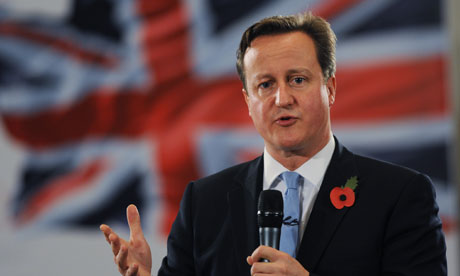
David Cameron has said the UK will accept up to 20,000 people from camps surrounding Syria over the next five years, with priority given to vulnerable children.
But Labour said that was inadequate and secured the three-hour Commons debate.
Shadow home secretary Yvette Cooper insisted the UK must also help refugees who have already reached Europe.
The prime minister said the UK had a "moral responsibility" to those displaced by the conflict in Syria.
But he said taking people from camps in Syria, Turkey and Jordan would provide a "direct and safe" route to safety, instead of encouraging them to make the "hazardous" journey across the Mediterranean by boat.
The new arrivals will be offered five-year humanitarian visas, under the Vulnerable Persons Relocation Scheme, and their resettlement will be paid for in the first year from the overseas aid budget.

Syrian refugees in the UK

20,000
more refugees will be resettled in the UK by 2020
4,980
Syrian asylum seekers have been allowed to stay since 2011
  • 25,771 people applied for asylum in the UK in the year to end June 2015
  • 2,204 were from Syria
  • 87% of Syrian requests for asylum were granted
  • 145 Syrian asylum seekers have been removed from the UK since 2011
AP
The UK has been forced to defend its response to the migrant crisis in recent days.
Mr Cameron has refused to take part in a proposed EU-wide quota system to resettle those people already in Europe, instead pointing to the UK's contribution of £1bn in humanitarian aid to Syria.
He had said that taking more people into the UK was not "the simple answer" to the crisis, but on Monday, announced the UK would do more.
However, the Green Party's Caroline Lucas said the commitment to resettle 20,000 refugees "falls pitifully short of what's needed", while the Archbishop of Canterbury Justin Welby called it a "very slim response".

'Frontloaded'

An estimated 340,000 asylum seekers have arrived in Europe so far this year, most braving dangerous sea journeys from North Africa and Turkey.
France said on Monday it would take in 24,000 refugees over the next two years, while about 18,000 people arrived in Germany last weekend alone.
But Hungary, the Czech Republic, Slovakia and Romania have all joined the UK in rejecting the idea of official resettlement quotas.
Ms Cooper, who persuaded Commons Speaker John Bercow to allow Tuesday's emergency debate, urged the prime minister to reconsider and "look at what more we are able to do with councils, with communities across the country who have come forward asking to help".
The Labour leadership candidate also dismissed the argument for restricting the scheme to those still in regional camps.
"He [the PM] has said he does not want to encourage people to travel - I would say to him they are travelling already, they are not waiting for a response from the British government," she said.
Boy sitting on suitcases waiting to leave the Syrian refugee camp in Zaatari, JordanImage copyrightAP
Image captionTens of thousands of displaced Syrians are living in the Zaatari refugee camp in Jordan
Maurice Wren, Refugee Council chief executive, said the government's programme must be "frontloaded" as people "cannot wait until 2020 to reach safety".
Save the Children said the UK announcement would "make a real difference", but it must also take some of the thousands of unaccompanied Syrian children who have already travelled to Europe.
The Petitions Committee will decide on Tuesday whether a petition calling for the UK to accept more refugees - which has more than 425,000 signatories - will be granted a Parliamentary debate.
Meanwhile, the influx of migrants to Europe shows no signs of abating.
The UN is sending more staff and ships to deal with the increasingly desperate situation on the Greek island of Lesbos where some 25,000 migrants are stranded and living in squalid conditions.
Read more.. Résumébloggeradsenseo

Lesbos 'on verge of explosion' as refugees crowd Greek island

Greece’s interior ministry says island of 85,000 inhabitants is currently hosting as many as 17,000 refugees in its capital alone

Refugees carry a boy after he collapsed in a tight crowd of people waiting to register in Mytilene, the capital of Lesbos. Photograph: Panagiotis Balaskas/EPA
Lesbos is on the verge of ‘explosion’, the Greek immigration ministry has said, as the island struggles to cope with the influx of thousands of refugees, mostly from Syria.
Yiannis Mouzalas told To Vima radio that boats taking refugees to the Greek mainland - the start point of a land route to Germany through Macedonia, Serbia and Hungary - would soon be using a second port to ease pressure on the island of 85,000 inhabitants.
“Mytilene [the capital of Lesbos] currently has 15,000 to 17,000 refugees and this is the official figure from all services,” Mouzalas, a junior interior minister, said. “We are placing emphasis here because the situation is on the verge of explosion.”
Greek television on Monday night reported scenes of chaos with as many as 6,000 refugees crowding the island’s port to board the Eleftherios Venizelos, a cruiseliner pressed into action to transport newcomers to the mainland. The surge was such that the ferry was forced to raise its gangplanks after it had docked. 
Athens’ caretaker government, which has made handling of the crisis its top priority ahead of general elections on 20 September, said it was also stepping up emergency aid, dispatching doctors and medical units to the island. In a bid to defuse tensions, the migration minister Yiannis Mouzalas also announced urgent measures, including the deployment of 60 coastguard officials and police from Athens to expedite the processing of refugees.
A physician with the international charity Doctors of the World, Mouzalas said conscripts had similarly been ordered to bake and distribute 1,500 loaves of bread to feed the crowds. But he conceded that security services were aware that a “small number” were likely to be Jihadis. “It would be foolish for anyone to deny [that],” he told Star TV adding that a lot of European-born Jihadis were also going the other way.
Lesbos is one of several Greek islands struggling with the arrival of thousands of refugees from nearby Turkey. The picture of a three-year-old Syrian boy, Aylan Kurdi, who drowned along with his mother Rehan and his five-year-old brother Ghalib off the Turkish coast, has put pressure on European governments to deal with the gravest refugee crisis the continent has faced since the second world war.
“We hope that in the next five days the islanders and the refugees will see clear signs of improvement,” Mouzalas said.
There have been clashes between police and new arrivals, and between refugees of different nationalities, over delays in the registration process that have held up their journeys on to other European countries. Syrians have been granted priority, sparking tensions with others forced to wait.
In July alone, 50,242 refugees and migrants arrived in Greece, significantly more that the figure 43,500 for the whole of 2014, according to the UN refugee agency (UNHCR). More than 200,000 people have arrived in Greece from Turkey so far in 2015.
Greece has received substantial support from the EU’s refugee fund, but has failed to provide adequate reception facilities, according to experts from the Centre for European Policy Studies.
On the Greek mainland, about 2,000 people gathered just before dawn on Monday at the border near the village of Idomeni, attempting to cross into Macedonia. By midday, about 1,000 had done so, and there were scuffles between Macedonian police and some of those trying to head north.
On Serbia’s border with Hungary, several hundred Arabs, Asians and Africans tired of waiting for buses broke through police lines and walked north on the main road to Budapest.
Police repeatedly tried to form lines blocking roads around a holding centre near the border village of Röszke, but the crowd vastly outnumbered them and raced through fields to reach the M5 motorway linking Hungary to Serbia.
Germany expects at least 10,000 more refugees to arrive on Monday, according to Christoph Hillenbrand, the district president of Upper Bavaria, after receiving 20,000 at the weekend.
Two Italian navy ships have brought 60 bodies ashore in Sicily from a shipwreck in April in which as many as 800 people died. The navy said their recovery brought the number of bodies its divers and robots had found to 118.
Prosecutors who viewed film taken by divers of the boat’s interior said the images support testimony from the few survivors that about 800 people were aboard when the vessel capsized as rescuers approached, with hundreds trapped in the hold.
Italy’s coast guard was also searching the waters between Libya and Sicily after 107 survivors rescued from an overcrowded dinghy told authorities about 20 people had fallen overboard and their smugglers would not stop to pick them up.
Read more.. Résumébloggeradsenseo

Sep 7, 2015

(Please Help Refugee‎‏)Syrian refugees call page on Facebook


Syrian refugees

Syrian refugees


Page launched by a group of young people to help Syrian refugees in all parts of the world and show their suffering
Please admiration this page on Facebook and support

Read more.. Résumébloggeradsenseo

Jun 27, 2014

Higher education levels linked to increased nearsightedness

Myopia - or nearsightedness - is a common condition that affects around 42% of all Americans. Now, new research suggests that higher levels of education and more years spent in school are linked with a greater prevalence and severity of the eye condition.
The research is published in Opthalmology, the journal of the American Academy of Opthalmology.
According to the organization, nearsightedness is a refractive error, whereby the eye does not bend or refract light correctly, causing close objects to look clear but distant objects to appear blurred.
Happy nerd
Though the condition is common, the researchers - led by Dr. Alireza Mirshahi of the University Medical Center in Mainz, Germany - say nearsightedness has become even more common around the world recently, making it an increasing global health and economic worry.
For example, in developed Asian countries, myopia rates have increased to nearly 80%, and the researchers say this rapid increase suggests environmental factors may be to blame.
Not only does severe nearsightedness cause visual impairment, but it is also linked with increased risk of retinal detachment, myopic macular degeneration, premature cataracts and glaucoma.
To further investigate the relationship between nearsightedness and environmental factors, the researchers examined 4,658 Germans with myopia who were between the ages of 35-74, after excluding any subjects with cataracts or anyone who had refractive surgery in the past.

Nearsightedness gets worse for every additional year of school

Their work is known as the Gutenberg Health Study and is the first population-based study to show that environmental factors outweigh genetics when it comes to myopia development.

Nearsightedness increases as education levels increase, researchers say.
Overall, their results show that as education level increased, myopia became more prevalent.
In detail, they found that 53% of university graduates were nearsighted, compared with 35% of high school graduates and 24% of subjects without a high school education.
Additionally, the team observed that people who spent more years in school were more myopic, with nearsightedness getting worse for every additional year of school. After looking at the effect of 45 genetic markers, they found them to be a much weaker factor in nearsightedness, compared with education level.
As a result of their findings, Dr. Mirshahi says children and young adults should be encouraged to go outside more often:
"Since students appear to be at a higher risk of nearsightedness, it makes sense to encourage them to spend more time outdoors as a precaution."
Furthermore, the team notes that recent studies of children and young adults in Denmark and Asia have shown that the more time spent outside exposed to daylight, the less the prevalence and severity of nearsightedness.
Just last month, the American Academy of Opthalmology released two new studies that added to the growing evidence that spending time outdoors may help prevent or minimize nearsightedness in children.
Read more.. Résumébloggeradsenseo

Blood test to indicate breast cancer risk 'in development'

Researchers from University College London in the UK are developing a simple blood test to help predict the likelihood of a woman developing breast cancer. They publish their research in the open access journal Genome Medicine.
The University College London (UCL) team first identified an epigenetic signature that can be detected in the blood of women who have an inherited genetic mutation that predisposes them to breast cancer.
The mutation occurs in the BRCA1 gene and is believed to cause at least 10% of breast cancers. The causes behind the other 90% of cancers are unknown, however. Increasingly, research is shifting from the idea that genetic mutations are the sole contributors to the development of the disease.
Instead, scientists are now investigating how the arrangement and expression of our geness - epigenetics - affects how they function. The subject of the UCL research is a much-studied epigenetic mechanism known as "DNA methylation."
The researchers analyzed blood samples collected from two large UK cohorts of women - the MRC National Survey of Health and Development and the UK Collaborative Trial of Ovarian Cancer Screening. The samples were taken several years before any of the woman had developed cancer.
Comparing the DNA methylation signatures in the blood of the women, the researchers found that the women who developed both hereditary and non-hereditary breast cancer shared the same signature.
As Prof. Martin Widschwendter, study lead author and Head of University College London's Department of Women's Cancer, explains:
"We identified an epigenetic signature in women with a mutated BRCA1 gene that was linked to increased cancer risk and lower survival rates. Surprisingly, we found the same signature in large cohorts of women without the BRCA1 mutation and it was able to predict breast cancer risk several years before diagnosis."
Prof. Widschwendter and colleagues believe that the epigenetic signature may be responsible for silencing genes in immune cells. If these genes are silenced, then the immune system may be less able to prevent the development of breast cancer.
woman checking breast
More research is needed to confirm whether the signature is an indicator of breast cancer risk or whether it is involved in the progression of the disease.
However, more research is needed to confirm whether the signature is an indicator of breast cancer risk or whether it is involved in the progression of the disease.
"The data is encouraging," Prof. Widschwendter concludes, "since it shows the potential of a blood-based epigenetic test to identify breast cancer risk in women without known predisposing genetic mutations."
Earlier this week, Medical News Today reported on a study published in JAMA that found the addition oftomosynthesis, a 3D imaging technique, to digital mammography improves breast cancer detection rates.
Also, a recent study published in PLOS Medicine explored using skin moles as a predictor of breast cancer. The researchers behind that study had observed that moles become bigger or darker during pregnancy, and so wondered if there was an association between elevated hormone levels and moles that might also influence breast cancer development.
Read more.. Résumébloggeradsenseo
All Rights Reserved © 2013 Technology News
تطوير: اتقان بلوجر